This Bonaire Dive Vacation Guide explains how to plan a scuba diving trip to Bonaire, the Dutch Caribbean island known as the shore diving capital of the world. Its entire coastline is protected as the Bonaire National Marine Park, more than 60 marked dive sites can be reached straight from the coastal road, and the island sits outside the main Atlantic hurricane belt, so diving is good in every month.
The Bonaire Dive Vacation Guide is written by the team at Dive Travel Curaçao, led by founder Bryan Horne, who has lived and worked in the Dutch Caribbean dive tourism industry for 20 years. It covers diving, fees, conservation, culture, parks, non-diver activities, and safety.
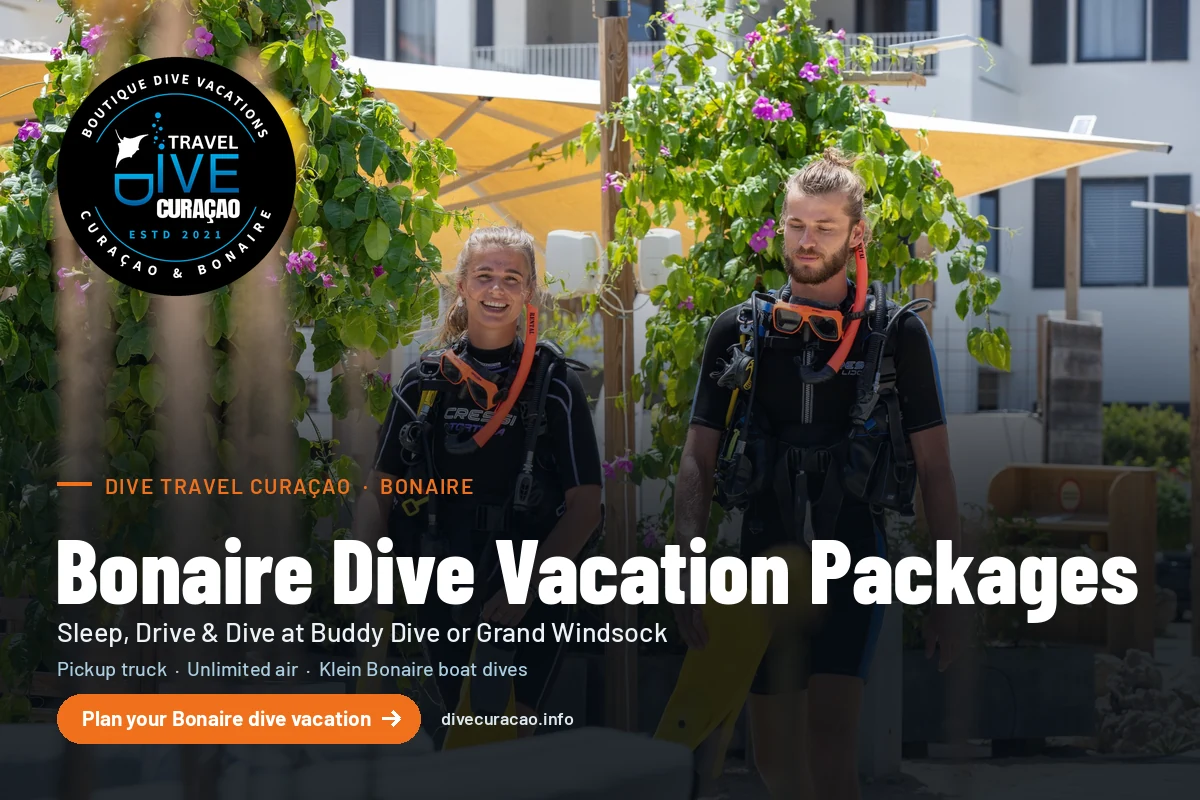
Ready to price out Bonaire dive vacation options? Our Bonaire dive vacation packages page covers resorts, Sleep, Drive & Dive packages, and how to book.
On this Page
Bonaire Dive Vacation Guide: Quick Facts
Use these quick facts from our Bonaire Dive Vacation Guide as a one-glance planning checklist.
| Topic | What to know |
| Location | Southern Caribbean off Venezuela; a special municipality of the Netherlands and one of the ABC Islands |
| Who this Bonaire Dive Vacation Guide is for | Certified divers of every level, underwater photographers, and couples or families with snorkelers |
| Getting there | Flamingo International Airport (BON), with flights from North America and Europe and a short hop from Curaçao |
| Currency | US dollar |
| Dive sites | More than 85 numbered marine park sites, over 60 of them reachable from shore |
| Weather | Dry and sunny, outside the main Atlantic hurricane belt |
| Mandatory fees | STINAPA Nature Fee USD $40 per calendar year; Visitor Entry Tax USD $75 (age 13+) or $10 (under 13) |
| Getting around | A pickup truck is the local standard for shore diving |
| Dive emergencies | Hyperbaric chamber at Fundashon Mariadal hospital in Kralendijk |
Key takeaways from the Bonaire Dive Vacation Guide: Bonaire is built for independent shore diving. Rent a pickup truck, pay the Nature Fee and Entry Tax online before you fly, start with a check-out dive, and plan a no-dive day before your flight home.
About Bonaire: The Shore Diving Capital of the World
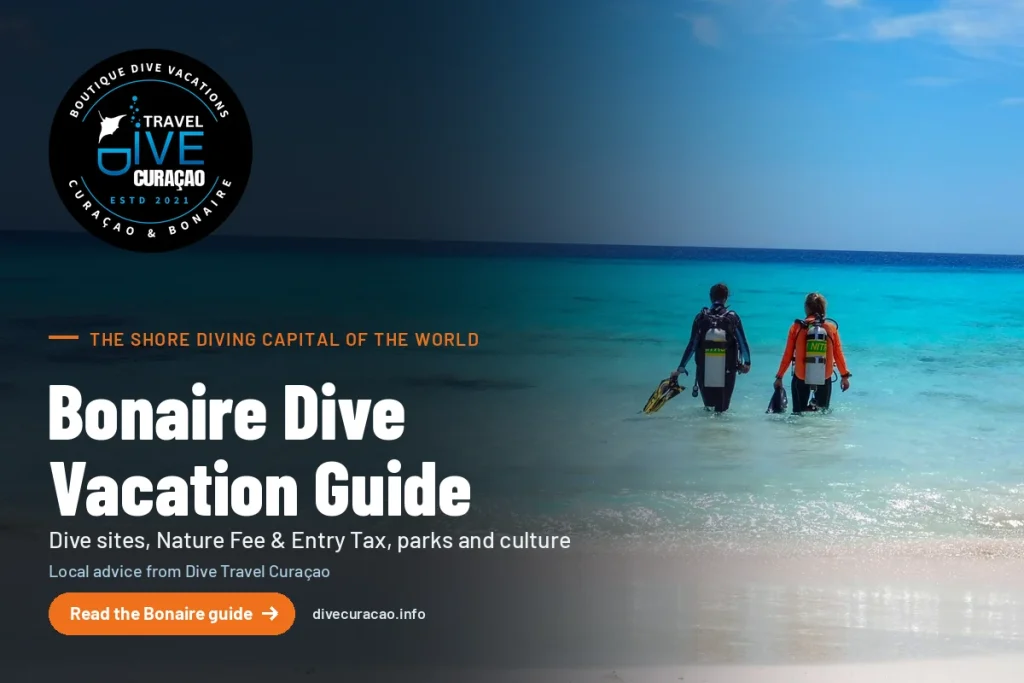
Bonaire lies outside the main hurricane belt, making it one of the most reliable year-round dive destinations in the Caribbean. Above the water it is arid and dramatic: cactus-covered hills in the north, salt flats and flamingos in the south, and the capital, Kralendijk, on the sheltered west coast. That mix of protected reefs, easy access and steady weather is why this Bonaire Dive Vacation Guide puts shore diving first. For official visitor information, see Tourism Corporation Bonaire.
How to Plan a Bonaire Dive Vacation: Step by Step
Follow the steps in this Bonaire Dive Vacation Guide in order and the logistics take care of themselves:
- Choose your dates. December to April is peak season and books first.
- Choose your base. Pick an oceanfront dive resort such as Buddy Dive Resort or Grand Windsock Dive & Beach Resort.
- Book a pickup truck.
- Pay the Nature Fee (link below) and Visitor Entry Tax online before you travel.
- Arrange insurance. Carry DAN Europe dive medical insurance and travel insurance.
- Pack smart: dive computer, surface marker buoy, reef-safe sunscreen, and your certification card.
- Plan your last dive so you have a full no-dive day before flying home.
When Is the Best Time for a Bonaire Dive Vacation?
There is no off-season for diving in Bonaire. Water stays warm, the west coast is sheltered from the trade winds, and visibility is consistently good. The Bonaire Dive Vacation Guide rule of thumb for booking: three to six months ahead for couples and families, and six to twelve months ahead for peak season, holidays, or groups.
Bonaire National Marine Park and the STINAPA Nature Fee
Everything in this Bonaire Dive Vacation Guide happens inside one protected area. Established in 1979, the Bonaire National Marine Park is one of the oldest marine reserves in the world. It covers all waters around Bonaire and Klein Bonaire from the high-water mark down to 60 meters (about 200 feet). It is managed by STINAPA, the Bonaire National Parks Foundation, and the Bonaire Dive Vacation Guide treats its rules as essential reading.
Nature Fee: What Every Diver and Snorkeler Needs
The most important rule in any Bonaire Dive Vacation Guide is simple: pay the Nature Fee before your first dive.
- Who pays: every visitor who dives, snorkels, or uses the marine park, and visitors to Washington Slagbaai National Park.
- Cost: USD $40 per person.
- Validity: the full calendar year (January to December), not per trip.
- How to pay: online in advance at stinapa.bonairenaturefee.org, or at sales points on the island. Dive operators will ask to see your digital tag.
The fee funds rangers, reef monitoring, and mooring buoys, and diving without a valid tag can mean a fine.
Marine Park Rules
- No touching, kneeling, or standing on coral.
- No collecting marine life, shells, or coral.
- Use reef-safe sunscreen only.
- No anchoring: boats use the park’s mooring buoys.
- Rinse gear in rinse tanks, not in the sea.
Read the complete rules and regulations from STINAPA before your trip.
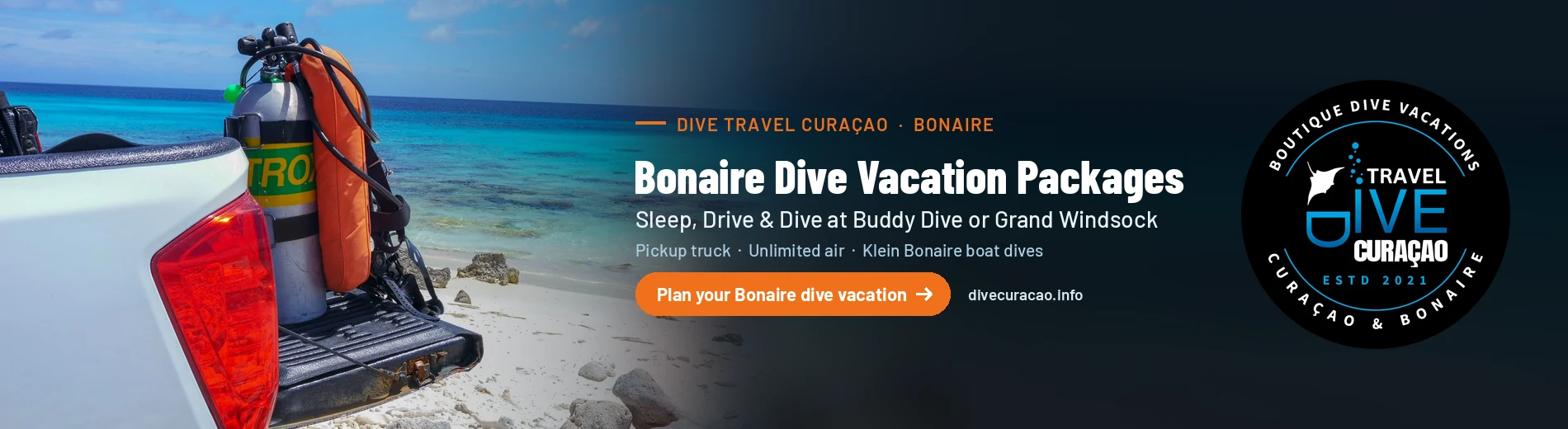
| Fees and Paperwork, Handled With You: Book through Dive Travel Curaçao and we walk you through every step in this Bonaire Dive Vacation Guide, including the Nature Fee and Visitor Entry Tax, so you arrive ready to dive. See Bonaire dive packages → |
Scuba Diving and Snorkeling in Bonaire
The diving is the heart of the Bonaire Dive Vacation Guide. The marine park has more than 85 numbered dive sites along the west coast and around Klein Bonaire, and more than 60 of them can be dived directly from shore.
Shore Diving: Follow the Yellow Stones
Bright yellow painted stones along the coastal road mark each official shore dive site, usually with the site name. The Bonaire Dive Vacation Guide routine: park, gear up, and walk in. The reef typically starts close to shore, so long surface swims are rare. Most visitors dive with a pickup truck, which is why our Bonaire packages include one.
Best Dive Sites in the Bonaire Dive Vacation Guide
- Salt Pier: coral-covered pilings and schooling fish; only diveable when no ship is docked.
- Hilma Hooker: Bonaire’s signature wreck, a 70-meter freighter on its side in about 30 meters (100 feet).
- 1000 Steps: a cliff staircase that feels like a thousand steps on the way back up, and a beautiful reef and wall.
- Bari Reef: near Kralendijk, famous for fish diversity, frogfish, and seahorses.
- Something Special: a sandy slope near the harbor entrance, known for garden eels and macro life.
- Red Slave: big coral on the southern tip, with more current; for experienced divers.
- Klein Bonaire: more than 20 boat-access sites with some of the park’s healthiest coral.
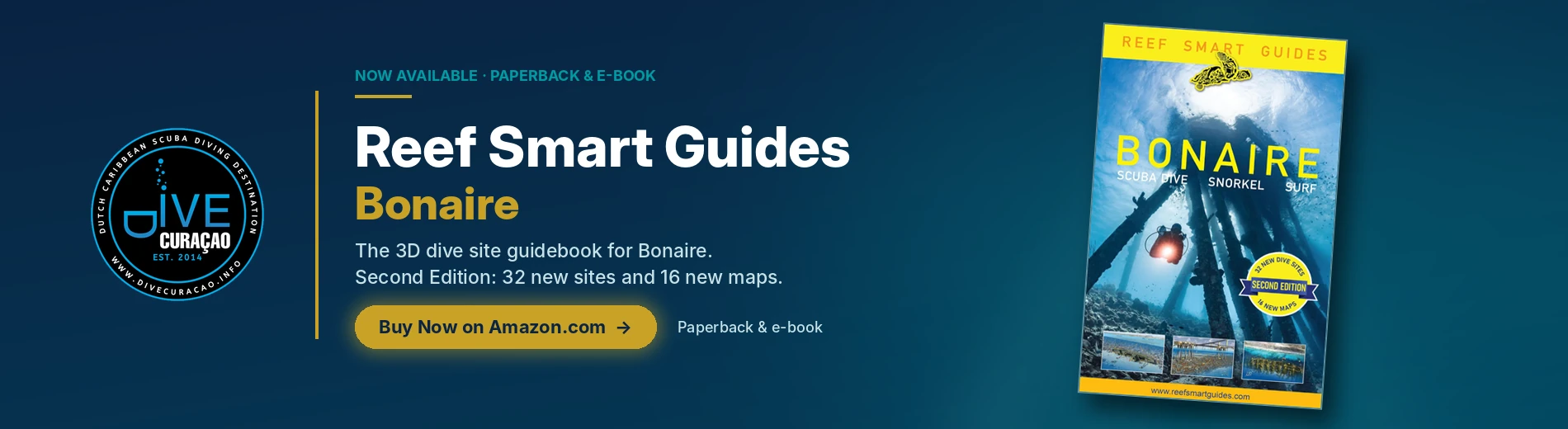
For site-by-site maps and marine life ID to pair with this Bonaire Dive Vacation Guide, see our Reef Smart Guides for Curaçao and Bonaire, or browse the official Bonaire dive site directory.
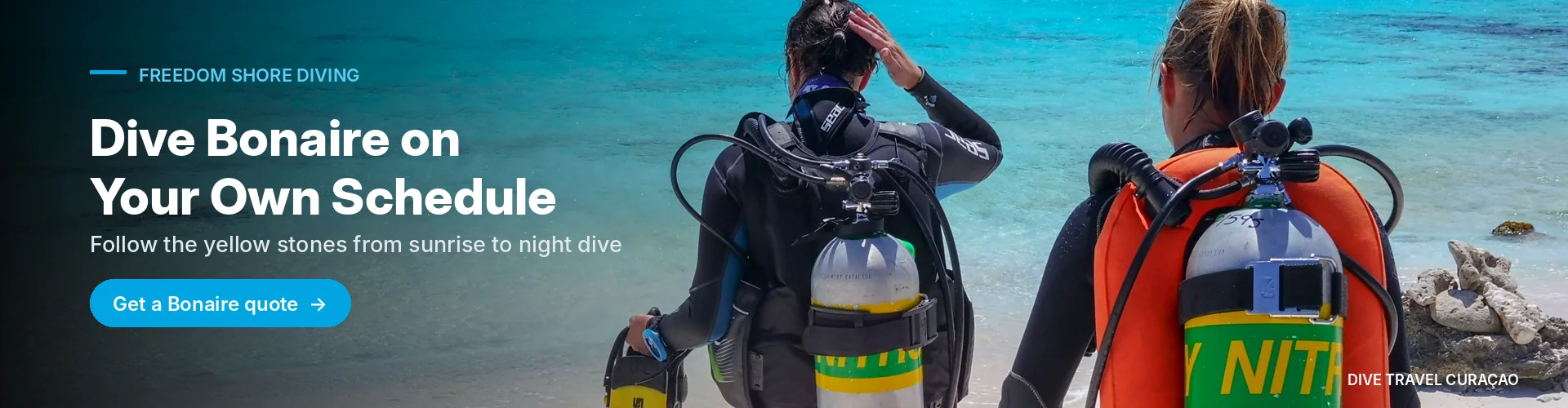
| Dive These Sites on Your Own Schedule: Our Sleep, Drive & Dive packages turn the Bonaire Dive Vacation Guide into a real trip: a pickup truck and unlimited air or nitrox, so you can follow the yellow stones from sunrise to night dive. View Sleep, Drive & Dive Bonaire → Get a quote → |
Night Diving and Underwater Photography
Night diving is a Bonaire Dive Vacation Guide favorite, and Bonaire is one of the easiest places in the world to do it, especially from a resort house reef you already know from daytime dives. Expect octopus, hunting tarpon, and basket stars, and for photographers, endless macro subjects such as frogfish, seahorses, and nudibranchs.
Snorkeling in Bonaire
You do not need tanks to enjoy Bonaire’s reefs. Shallow reef tops and easy entries make many shore sites rewarding for snorkelers. Popular choices include Te Amo Beach, the Andrea I and Andrea II sites, and No Name Beach on Klein Bonaire, reached by water taxi. Snorkelers following this Bonaire Dive Vacation Guide also need a valid Nature Fee tag.
Coral Restoration and Conservation in Bonaire
Bonaire is often called the Caribbean’s original sustainable dive destination, and conservation runs through every page of the Bonaire Dive Vacation Guide. The Reef Renewal Foundation Bonaire runs coral nurseries and out-planting programs within the marine park to restore threatened staghorn and elkhorn coral. Visiting divers can join restoration dives or adopt a coral, a Bonaire Dive Vacation Guide favorite for giving back.
On land, STINAPA protects dry forest habitats and native species such as the yellow-shouldered Amazon parrot, while Sea Turtle Conservation Bonaire monitors nesting beaches and runs public education programs.
Bonaire History and Culture
Bonaire’s first inhabitants, the Caquetío people, left petroglyphs that can still be seen in northern caves. The Spanish claimed Bonaire in 1499 and the Dutch took control in the 17th century, building the salt trade that shaped the island. The tiny stone slave huts near the southern salt pans are a sobering reminder of that history, and one of the stops this Bonaire Dive Vacation Guide recommends on a no-dive day.
Today Dutch is the official language, but you will hear Papiamentu everywhere, alongside English and Spanish. Rincon, the island’s oldest village, is the heart of traditional culture and the Simadan harvest festival.
Food and Dining in Bonaire
Bonaire’s food blends Dutch, Caribbean, and Latin influences. Look for local dishes such as stoba (slow-cooked stew), kabritu (goat), funchi (cornmeal), and pan bati (a Caribbean pancake-style flatbread). Lionfish on the menu is a delicious way to support reef health, since the species is invasive in the Caribbean.
The Bonaire Dive Vacation Guide tip for divers: a resort apartment with a kitchen makes it easy to mix nights out with simple meals after a long dive day.
Bonaire National Parks and Natural Beauty
Washington Slagbaai National Park
Covering roughly a fifth of the island, Washington Slagbaai National Park protects cactus forest, salt lakes, remote beaches, and wildlife including parrots, flamingos, and iguanas. Its dirt roads need a high-clearance vehicle, and Brandaris, Bonaire’s highest point at 241 meters, is a rewarding hike. Entry is covered by the Nature Fee, and a full park day is a Bonaire Dive Vacation Guide must for any no-dive day.
Lac Bay and the Mangroves
On the windward east coast, Lac Bay protects one of the best-preserved mangrove forests in the Caribbean and is a Ramsar-listed wetland of international importance. Guided kayak tours through the mangrove channels are the Bonaire Dive Vacation Guide pick for non-divers.
Salt Flats and Flamingos
Southern Bonaire is home to brilliant pink salt ponds and the Pekelmeer flamingo sanctuary, one of the most important Caribbean flamingo breeding grounds. The drive past the salt pans and slave huts is a favorite surface-interval outing in the Bonaire Dive Vacation Guide.
Things to Do in Bonaire for Non-Divers
A great Bonaire dive vacation works for everyone in the group. This part of the Bonaire Dive Vacation Guide is for travel companions who don’t dive, and for divers on a day off:
- Windsurfing and kiteboarding: Lac Bay is world-famous for windsurfing in shallow, flat water, and Atlantis Beach in the southwest is the kiteboarding hub.
- Kayaking and paddleboarding: explore the Lac Bay mangroves with a licensed eco-guide.
- Hiking and biking: trails around Rincon and in Washington Slagbaai range from easy to challenging.
- Birdwatching: more than 200 bird species have been recorded, including flamingos and the yellow-shouldered Amazon parrot.
- Beaches: Sorobon on Lac Bay, Te Amo near the airport, and No Name Beach on Klein Bonaire.
| Traveling With a Non-Diver? We plan the land-based side of your trip as carefully as the diving: kayak tours, windsurfing lessons, national park days, and the right resort for both of you. Ask us to tailor the Bonaire Dive Vacation Guide to your group. Plan a trip for divers and non-divers → |
Practical Travel Information for Your Bonaire Dive Vacation
Bonaire Visitor Entry Tax
Every non-resident visitor pays the Bonaire Visitor Entry Tax, which is separate from the Nature Fee:
- USD $75 per visitor aged 13 and older
- USD $10 per child under 13
Pay online in advance at tourismtax.bonairegov.com and keep the QR code handy. Bonaire Dive Vacation Guide tip: paying ahead is the fastest way through arrivals. The tax is valid for 30 days from first arrival, which matters for twin-island itineraries that leave and return.
Currency and Payments
Bonaire uses the US dollar, and cards are widely accepted.
Getting Around: Why You Need a Truck
If the Bonaire Dive Vacation Guide had one non-negotiable, it would be the truck. Shore dive sites are spread along the coast, many on unpaved tracks, and Washington Slagbaai requires a high-clearance vehicle. A mid-size pickup carries tanks and gear safely. Trucks are included in our Bonaire dive packages, or see our car and truck rentals.
Dive Safety in Bonaire
Bonaire is one of the Caribbean’s safest islands; just lock your truck and never leave valuables visible at a dive site.
Bonaire Dive Vacation Guide Safety Checklist
- Do a check-out dive on your first day, ideally on your resort house reef.
- Always dive with a buddy and carry a surface marker buoy.
- Check current and surf conditions before entering, especially on the southern sites.
- Plan conservative profiles on repetitive shore dives, and schedule a no-dive day before flying to reduce the risk of decompression sickness.
- Look, don’t touch: respect the marine park rules.
Medical and Emergency Services
Fundashon Mariadal is Bonaire’s hospital and houses the island’s hyperbaric chamber for dive emergencies. In an emergency, call 911. The Bonaire Dive Vacation Guide also recommends saving your resort’s emergency numbers before your first dive. Carry valid dive medical insurance and travel insurance.
Bonaire Dive Vacation Guide FAQ
What does the Bonaire Dive Vacation Guide cover?
The Bonaire Dive Vacation Guide from Dive Travel Curaçao covers the best shore and boat dive sites, the STINAPA Nature Fee and Visitor Entry Tax, marine park rules, how to plan a trip step by step, culture, food, national parks, activities for non-divers, and dive safety.
Who writes the Bonaire Dive Vacation Guide?
The Bonaire Dive Vacation Guide is written by Dive Travel Curaçao, a Curaçao-based dive travel company founded by Bryan Horne, who has 20 years of experience in Dutch Caribbean dive tourism.
How much is the Bonaire Nature Fee?
The STINAPA Nature Fee is USD $40 per person and is valid for the full calendar year. It is required for diving, snorkeling, and other use of the Bonaire National Marine Park, and also covers Washington Slagbaai National Park. It can be paid online at stinapa.bonairenaturefee.org.
How much is the Bonaire Visitor Entry Tax?
The Visitor Entry Tax is USD $75 per visitor aged 13 and older and USD $10 for children under 13. It is separate from the Nature Fee and can be paid online before arrival at tourismtax.bonairegov.com. It is valid for 30 days from first arrival.
How many dive sites does Bonaire have?
The Bonaire National Marine Park has more than 85 numbered dive sites along the west coast and around Klein Bonaire, and more than 60 of them can be dived directly from shore.
When is the best time for a Bonaire dive vacation?
Bonaire is a year-round dive destination outside the main Atlantic hurricane belt. December to April is peak season, so the Bonaire Dive Vacation Guide recommends booking six to twelve months ahead for those dates.
Do I need a dive guide in Bonaire?
No. Bonaire is famous for self-guided shore diving with a buddy. Guided dives are recommended for your first dive, for night dives if you are new to them, and for boat dives to Klein Bonaire.
What are the yellow stones in Bonaire?
Yellow painted stones along Bonaire’s coastal road mark official shore dive sites in the marine park, usually with the site name. Divers park beside them and enter the water from shore.
Is Bonaire good for non-divers?
Yes. Non-divers can snorkel, windsurf and kiteboard, kayak the Lac Bay mangroves, hike Washington Slagbaai National Park, see flamingos at the salt flats, and explore Kralendijk and Rincon.
Does Bonaire have a hyperbaric chamber?
Yes. Bonaire’s hyperbaric chamber is located at Fundashon Mariadal hospital in Kralendijk. Divers should still carry dive medical insurance such as DAN Europe coverage.
Plan Your Bonaire Dive Vacation with Local Experts
This Bonaire Dive Vacation Guide is the starting point. Dive Travel Curaçao turns it into a booked trip at Buddy Dive Resort or Grand Windsock Dive & Beach Resort, with a truck, unlimited air or nitrox, and on-island support, and we can combine Bonaire with Curaçao in one itinerary.
Email reservations@divecuracao.info · Toll-free USA/Canada +1 (855) 650-1558 · Curaçao / WhatsApp +599 9 699 5297
See Bonaire dive vacation packages · Contact our reservations team